 Jordan2
 Kilimanjaro9
 Morocco4
 Uganda4
 United Arab Emirates3
 Argentina3
 Chile2
 Cuba2
 Ecuador3
 Guyana2
 Peru12
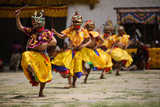 Bhutan4
 Indonesia3
 Ladakh4
 Nepal12
 Pakistan1
 France2
 Georgia3
 Greenland2
 Norway2
 Svalbard4
 Trekking
 Summits
 Arctic
 Winter
 Kayaking
 Multi-activity
 Safaris
 Ultimate
 Kandoo Lite
Traditions of Bhutan
- 6days
- Moderate
- 3,110 mhighest point
- 860 mtotal ascent
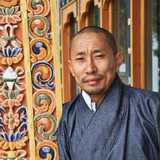 Your local teamTandin Tshering© Adobe Stock
The Buddhist Kingdom of Bhutan lies along the lofty ridges of the eastern Himalayas, bordered by China (Tibet) to the north and northwest, and by the Indian states of Arunachal Pradesh, Assam, West Bengal and Sikkim on the east, south and west respectively. With an area of 46,500 square km, Bhutan is comparable to Switzerland both in its size and topography. The mighty Himalaya have protected Bhutan from the rest of the world and left it blissfully untouched through the centuries. The Bhutanese people have protected this sacred heritage and unique identity for centuries by choosing to remain shrouded in a jealously guarded isolation. Experience the remote, gentle nature of it’s people on a once in a lifetime trip.
Trip highlights
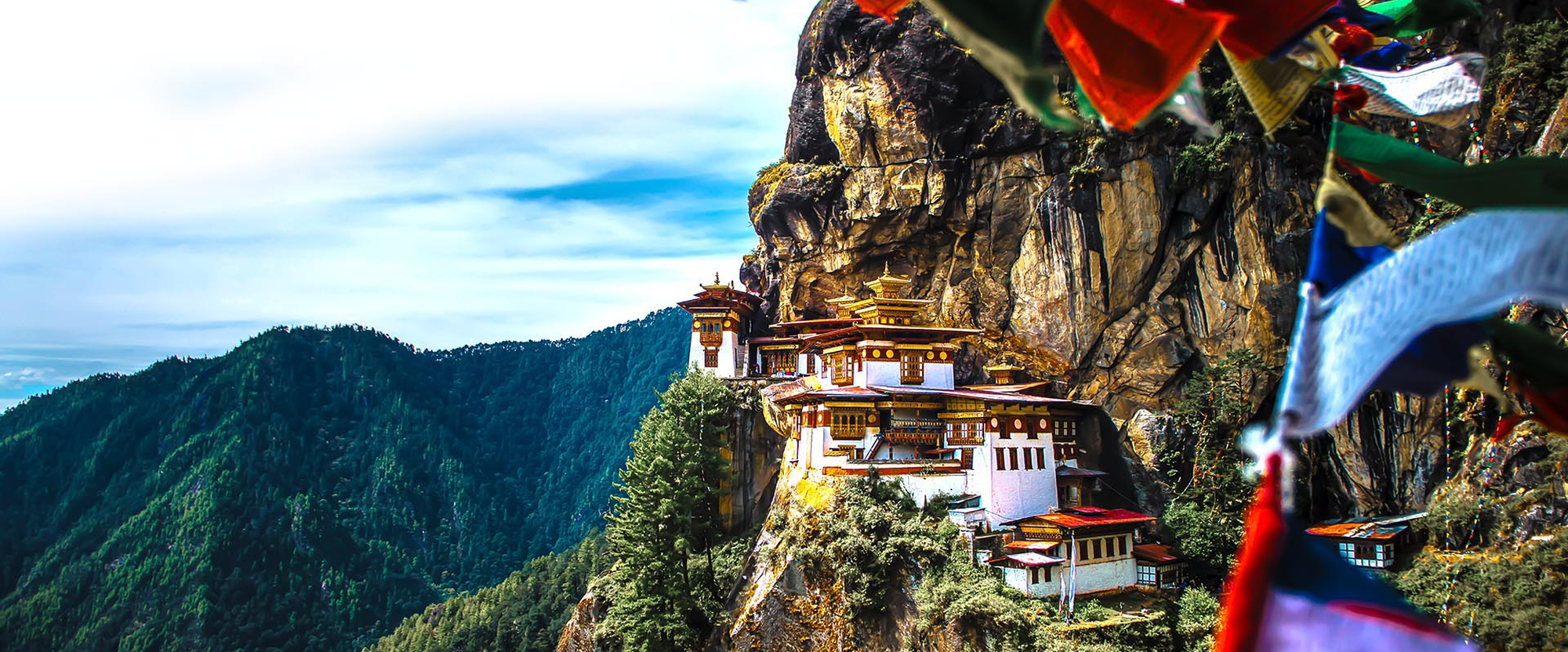
- Visit the breathtaking Tiger’s Nest Monastery
- Be immersed in the ancient culture of Paro, Punakha and Thimphu
- Experience the magnificent view on the Dochu-La pass
- Trip fully carbon offset as standard
- 6 to 8 hours walking or activity each day.
- Up to 1200m of vertical ascent per day.
- You may be reaching altitudes over 4000m.
You should have a good level of fitness and be accustomed to long days of hiking.
6 days, day by day
The line is each day's high point. Flat steps are the rest and acclimatisation days that keep you safe up high.
The Kandoo team will be waiting for you at Paro airport to transfer you to your hotel. If you wish, there is the option to join a tour of the city in the afternoon. Ta Dzong was inaugurated as Bhutan's National Museum in 1968. Built as a watchtower to defend Rinpung Dzong during the inter-valley wars of the 17th century, it is now home to a fascinating collection of art, relics, religious thangkha paintings and Bhutan's exquisite postage stamps. Afterwards, we will walk down a hillside trail to visit Rinpung Dzong, 'The Fortress of the Heap of Jewels'. Built in 1646 by Shabdrung Ngawang Namgyal, the first spiritual and temporal ruler of Bhutan, the Dzong now houses the offices of the district administration and themonastic body of Paro. The approach to the Dzong is through a covered wooden bridge typical of Bhutan called Nemi Zam, which offers a great view of the architectural wonder of the Dzong.
- Hotel
- Breakfast / Lunch / Dinner
- Private transfer
In the morning we will take an excursion to Taktshang Lhakhang, commonly known as 'The Tiger’s Nest Monastery'. Undoubtedly one of the most famous of Bhutan’s monasteries, the Taktshang monastery is one of the most breath-taking temples in the world. This Buddhist place of worship is perched on a cliff-top at around 3,100m (10,000ft) above sea level. The main temple complex was built in 1692, and is considered to be one of the holiest for the Bhutanese people. Legend has it that Guru Rinpoche, an 8th-century Indian Buddhist master, arrived here on the back of a tigress and meditated at this monastery, thus the name ‘Tiger’s Nest’. The site has been recognized as a sacred place and is now visited by all Bhutanese at least once in their lifetime. On 19 April, 1998, a fire severely damaged the main structure of building but now this Bhutanese jewel has been restored to its original splendour. We will stop for lunch at a café halfway down the trail, before continuing back down to our vehicle. If time permits we may visit the 7th century Kyichu Lhakhang, one of the 108 temples built in the Himalayas by Tibetan King, Songtsen Gampo, on our return journey to Paro. After our tours we will return to our hotel in Paro.
- 5 - 6 hours walking
- 860 m up
- 860 m down
- Hotel
- Breakfast / Lunch / Dinner
On arrival in Thimphu there will be time to enjoy a city tour. The King’s Memorial Chorten was planned by Bhutan’s third king, His Majesty Jigme Dorji Wangchuk, but was only completed after his death so now serves as his memorial. An important religious site and the focus of daily worship, people will circumambulate the chorten throughout the day, reciting prayers and whirling the red prayer wheels. You may also visit the Trashichhoe Dzong – The Fortress of the Glorious Religion – the seat of government and religion which is home to the monarch’s throne room. Originally built in 1641, the Dzong was rebuilt in the 1960s using traditional Bhutanese methods. You will stay in a hotel in Thimphu tonight.
- Hotel
- Breakfast / Lunch / Dinner
This morning you will continue with your tour of Thimphu. The National Library houses a collection of ancient Buddhist manuscripts and texts dating back over hundreds of years, as well as modern academic books about Himalayan religion and culture. The Institute for Zorig Chusum is an Arts and Crafts School where students learn the 13 traditional arts and crafts of Bhutan. The Textile Museum is he place to learn about Bhutan’s history of weaving, from the techniques used by local people to the wedding clothes worn by the king. Simply Bhutan is a living museum that introduces many aspects of Bhutanese traditional life. The project aims to preserve and promote culture, and provides job opportunities and training to young people. (Please be aware that not all sites may be open on the day you are due to visit Thimphu. The National Library and the Institute for Zorig Chusum are both closed on weekends and government holidays. The Textile Museum is closed on Sundays and government holidays.) After lunch, you will be driven from Thimphu to Punakha, which takes around 3 hours. The road takes you up to the Dochu-La Pass on a series of switchbacks. The highest point on the road, 3088m, is marked by a chorten, mani wall and many prayer flags. The view from here is magnificent and the panorama includes the towering peaks of Masagang (7,158m), Tsendagang (6,960m), Terigang (7,060m), Jejegangphugang (7,158m), Kangphugang (7,170m), Zongphugang (7,060m), and Gangkar Puensum (7,570m). The road from the pass drops down into the Punakha valley and on to the town of Punakha where you will stay in a hotel.
- Hotel
- Breakfast / Lunch / Dinner
Pick your departure
Small groups that run once a few people book, and guaranteed dates that run whatever happens.
Private departures, on the dates you choose.
This trip runs for private groups. Tell us your dates and group size and we'll price it.
Ask for dates- Transfer to hotel
- Hotels as per your itinerary
- Bhutan Visa and Government Royalty fees
- Qualified local guide
- All meals during the trip
- Drinking water when out on excursions
- Access to emergency oxygen
- Transfer to Paro airport
- Airfares and departure taxes unless stated
- Items of a personal nature
- Tips for your crew
- Personal travel insurance to include trekking to 3500m
- Snacks or personal medicine
- Meals & drinks not specified
- Meals taken outside of hotel or approved restaurant
- Entry visa for Nepal or India (if stopping in Kathmandu or Delhi)
On the trail
Before you go
Difficulty, food, rooms, kit, money, visas and health, straight from the trip dossier.
Download trip dossierOn our Bhutan trips all meals are provided during your stay, both out on activities and at the hotels.
At the hotels, all meals are provided on a fixed menu basis, with a selection of options placed on your table each mealtime for you to help yourself to. Bhutanese cuisine generally consists of steamed rice (red and white) with a varied choice of spicy curries, both vegetarian and non-vegetarian, noodles, meats and chilli cheese sauce. Most hotels provide meals buffet‐style. The food in hotels is often the best in town, but restaurants in the main towns are increasingly becoming popular. All tourist hotels have a good selection of international and Bhutanese beverages.
Whilst in the hotels you will be provided with bottled water. We will also provide drinking water during your cultural tours. To reduce the use of plastic bottles, we would ask that you bring a re-usable drinks bottle that we can fill for you. If you are planning on using a hydration bag for the trip, this may not be comfortable to use around town, so we recommend you bring a smaller drinks bottle as well.
Hotels in Bhutan all have to be approved by the Tourism Council of Bhutan. Our standard hotels are all clean and comfortable and are chosen because of their great locations, often in quieter parts of town, to help you get a good nights' sleep.
In Bhutan having a guide is a mandatory requirement to visit the mountainous areas outside of Paro and Thimphu. During your trip in Bhutan your guide and drivers will be at your disposal from your point of arrival to your drop off at the airport. Our itineraries are jam packed with things to do, however, it is unlikely that you will complete everything we list on our days in the cities. It is therefore important that if you wish to explore particular places during these days or have a particular activity in mind for your free time, you will need to discuss this with the guide.
We insist on using a high standard of vehicle and driver for all of our transfers. In Bhutan it is not a legal requirement to have seatbelts fitted in the back of vehicles, and while we try to use vehicles that do have rear seatbelts fitted, this cannot always be guaranteed. If you are unhappy about any aspect of the vehicle or the standard of driving, please speak to the driver or our local office immediately.
The main airport in Bhutan is Paro (2,225m) which currently receives flights from Bangkok, Dhaka, Delhi, Kolkata, Kathmandu, Doha, Kuala Lumpur and Singapore. This means that you need to get to one of these hubs to catch a connecting flight to Paro. Druk Air has also introduced flights twice per week on a Tuesdays and Saturdays from Dubai to Paro, making connections to Bhutan a much easier process!
The flight into Paro is pretty exciting as the position of the airport requires the plane to get much closer to the mountain tops than most other flights in the world. If you are lucky enough to fly from Kathmandu to Paro and the weather is clear you will fly over 4 of the 5 highest mountains in the world - Mt. Everest, Lhotse, Makalu and Kangchenjunga.
If you are changing airlines or re-checking your luggage at an airport on route, please ensure you leave a minimum of 3 hours between flights. This will account for any delays on arrival, travel time across airports (this can take longer than you think) and time taken to re-check baggage.
Once you have cleared immigration and collected your luggage, make your way to the main doors. Your driver will be outside these doors, holding a ‘Kandoo’ sign. Paro airport terminal building is very small so they will be hard to miss. It is roughly a 20 minute drive from the airport to our hotel.
Travelling Responsibly
Here at Kandoo, we like to support our guests to make their travel more sustainable. As of 2025, we are offsetting the carbon on all of our trips from arrival in destination to dropping you back off at the airport. As we don't include flight travel in our trips these aren't included in our offsetting calculations, so we are providing you with the calculator below for you to do this yourselves.
eC02 Flights Calculator
The Bhutanese Ngultrum (Nu) is the local currency of Bhutan and equal in value to the Indian Rupee. It is a closed currency so you will not be able to buy this before you arrive. All major currencies, such as US Dollars, Sterling Pounds and Euros, can be exchanged at Paro Airport, banks and hotels. We would recommend exchanging your money at the airport as you may not get a chance to do so after leaving the airport terminal. Top tip:$50 bills (and larger) get a better exchange rate than smaller bills.
Bhutan is a cash economy and credit cards are not commonly accepted. Mastercard may be accepted in larger shops and hotels, but Amex is rarely accepted. If you are relying on a credit or debit card for emergency funds while you travel, make sure you tell your card issuer that you will be using it abroad, or you may find that it won't work when you really need it.
A meal out for 2 people in Bhutan will cost ~$18, however this is included in the cost of your trip so, unless you wish to eat at a different restaurant, the only money you need is for tips and souvenirs. The most common souvenir purchases are Bhutanese wall hangings. These can be expensive, ranging from $20-$1000. Prepare for this if you plan on bringing one home. There are, however, plenty of inexpensive souvenirs you can pick up as well. Our recommended guidance for spending budget in Bhutan would be between $50-150 on top of your tips, give you ample souvenir spending money.
Tipping is not approved by the Bhutanese tourist board. However, it has become customary practice to tip the guides who have assisted you throughout your stay. The decision on how much to tip should be determined by how well the team served during your time in Bhutan. Tips can be made in US dollars or Bhutanese Ngultrum. It is very important that US bills be new (less than 10 years old), crisp and untorn. See below our tip recommendations per guest for this trip:
Lead guide: $120
Assistant guide (groups of 5+ only): $80
Driver: $50
Please double check that your passport is valid for 6 months beyond the date of arrival in Bhutan. We recommend that you take a photocopy of your passport and keep it separate from the original, as this will be useful if the original is lost while you are traveling.
Visa requirements:
Visas can only be arranged by travel companies and are issued on arrival to those on a prepaid all-inclusive tour. In order to process your Bhutan visa we require a clear readable colour copy of your passport containing the passport number and photograph in JPEG or PDF format.
Transit visas:
Your domestic flight into Bhutan is likely to be on a separate ticket to your international flight. As a result, your luggage will not be checked right through to your final destination and you will need to clear immigration at your transit airport in order to collect your bag and check it back in for your international connection. Double check with your airline what the immigration and visa requirements are for the airport you are to transit through, and whether they are able to re-check your bags for you. Otherwise, you may need to arrange transit visas prior to travel. This is especially important if you are planning on travelling via India, as a transit visa is required and it must be arranged in advance.
The standard vaccinations required for Bhutan are hepatitis A, tetanus and typhoid.
Cholera vaccination is recommended but not required.
Yellow fever vaccination is only required if you are travelling from a country where yellow fever is prevalent.
Vaccination requirements are subject to change and you should always consult your doctor or travel clinic for the most up to date advice.
Before you can join any Kandoo Adventures trek, you will need to insure yourself against accident, injury, and illness.
Your insurance must cover the cost of helicopter evacuation and repatriation if necessary. Make sure your insurer knows of your travel plans, and verify that your policy fully covers your trek, climb, and any other activities you will participate in. Specifically, treks to Chomolhari require insurance coverage up to 5000m, for the Druk Path up to 4500m is required and the Snowman Trek up to 6000m.
It is your responsibility to ensure that you are fully and adequately insured for the duration of your trip. Please ensure that all activities, excursions and destinations in your itinerary are included in your travel insurance policy, in addition to your regular cover for cancellation and medical expenses.
We ask that you keep a copy of your policy summary (containing policy number and the emergency contact number for your insurer) in your day sack at all times, so that we can access this information should we need to contact the insurer on your behalf.
Malaria
There is little risk of malaria on the majority of Bhutanese treks that we operate, due to the altitude, particularly in Bumthang, Gasa, Paro and Thimphu. However, there is a risk of malaria in areas below 1,500m so we recommend you take advice if traveling outside the areas in which we operate. In addition to any medication, we would recommend you take every precaution to prevent mosquito bites by wearing long-sleeved trousers and shirts at dusk and dawn when the mosquitos are active, and by using a DEET based mosquito repellent.
Altitude Sickness
Altitude sickness, also called Acute Mountain Sickness (AMS), hypobaropathy and soroche, is an illness caused by exposure to low air pressure, especially low partial pressure of oxygen, which many trekkers experience at high altitudes. AMS is caused by exerting yourself at high altitudes, especially if you have not been properly acclimatised. It is most common at altitudes above 2400 metres. All trekking routes that involve trekking to high altitudes have been carefully designed to aid your acclimatisation wherever possible, but the following will also help your body to adjust:
Slow and steady. You need to keep your respiration rate low enough to maintain a normal conversation. If you are panting or breathing hard, you must slow down. There is no pressure on you to keep up with other members of your group.
Drink much more water than you think you need. Proper hydration helps acclimatisation dramatically. You need to drink at least three litres each day.
Diamox. There has been a lot of research on Diamox that shows it has been reasonably well proven to be helpful in avoiding AMS by speeding up the acclimatisation process. In the UK in it a prescription only drug which must be prescribed by a doctor, but some doctors are reluctant to prescribe it. The concern is that, by taking Diamox, people believe that they are immune from AMS and can ignore the symptoms. In reality, although Diamox can help prevent the symptoms, should symptoms still develop it means that you are not acclimatising and you have to take notice. Diamox is taken before you start trekking to prevent altitude sickness, not once you are on the trek and symptoms have developed.
Dehydration
You can easily become dehydrated at high altitudes. The lower air pressure forces you to breathe more quickly and deeply, and you lose a lot of water through your lungs. You will also be exerting yourself, sweating and you may also suffer from diarrhoea. As a result, you will have to drink much more water than you normally would so you should drink at least 3 litres of fluids every day while trekking. Even when you do not feel thirsty you have to drink this amount as a minimum, preferably more. Stay on the look-out for signs of dehydration in yourself and your fellow trekkers. The most common symptoms include thirst, dry lips, mouth or nose, headache and feeling fatigues or lethargic.
Long sleeve shirt/t-shirts – light or medium weight, moisture wicking (x 2)
Short sleeved shirt/t-shirt – lightweight, moisture wicking (x2)
Fleece or softshell jacket (x1)
Insulated jacket – down or primaloft
Lightweight water/windproof hard shell outer jacket
Lightweight trousers or ¾ length shorts
Waterproof hardshell trousers
Trekking boots – mid weight with good ankle support
Training shoe or comfortable sandals
Mid-weight trekking socks (x1 pair)
Thermal trekking socks – useful when visiting monasteries (x1 pair)
Sun hat – preferably wide-brimmed for protection
Sunglasses – high UV protection
Small Rucksack or Daypack (30-40 litres) to carry water and personal items
Waterproof duffle bag (approx 80-100 litres)
Trekking poles
Water bottle or hydration bag – must be able to carry 1.5-2.0L
Sunscreen and lip balm - high SPF
Toiletries, including wet wipes and hand sanitiser
Camera and spare batteries
Dry bag (only required if your main duffle bag is not waterproof)
Binoculars